How Much Water Should I Drink to Lose Weight? The Honest Number
The honest answer: about half your bodyweight in ounces, plus a 16-ounce glass thirty minutes before meals. The mechanism is real but small. Here's the research.
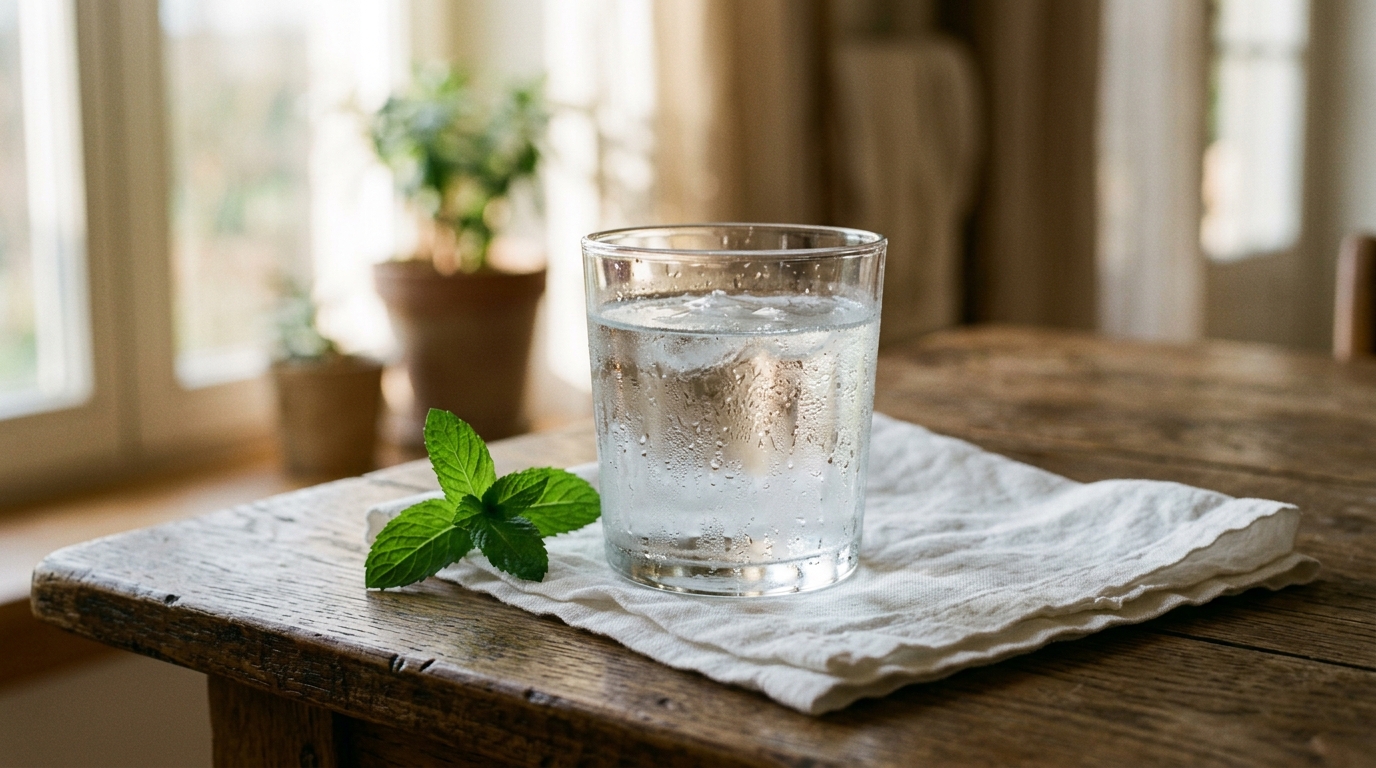
The U.S. National Academies of Sciences set adequate water intake at 3.7 liters per day for adult men and 2.7 liters for women from all beverages and food. For weight loss specifically, a 2010 randomized trial in Obesity found that drinking 500 ml (about 17 ounces) of water 30 minutes before each main meal led to roughly 44 percent more weight loss over 12 weeks than the control group. Practical target: half your bodyweight in ounces daily, plus a glass before meals.
The short answer
There is a real, small, repeatable effect of water on weight loss — and it is not what the wellness internet sells you. Water does not "boost metabolism" enough to matter. It does not "flush fat" out of cells. What it does, well-documented in clinical trials, is occupy stomach volume before a meal so you eat fewer calories at that meal. That's the mechanism. Stack that pre-meal habit on top of an adequate daily intake — roughly half your bodyweight in ounces — and you have water working as hard as it can for you. The rest is hydration, which keeps you healthy but doesn't move the scale on its own.
What the science actually says
How much water do I actually need per day?
The U.S. National Academies of Sciences, Engineering, and Medicine sets adequate daily total water intake at:
- 3.7 liters (about 125 oz) for adult men
- 2.7 liters (about 91 oz) for adult women
That's total water — including the water in food (about 20 percent of the average person's intake) and other beverages. The drinking-water-only target is roughly 13 cups for men and 9 cups for women. The simpler practical heuristic that lands in the same neighborhood: half your bodyweight in ounces. A 180-pound adult ends up at 90 oz (about 2.7 liters), which fits inside the recommended range comfortably.
Does drinking water before meals reduce calorie intake?
Yes — and this is the single most-replicated weight-loss finding for water. A 2010 randomized controlled trial published in Obesity by Dennis et al. randomized adults aged 55 to 75 to either drink 500 ml of water 30 minutes before meals or not. Both groups followed the same hypocaloric diet. After 12 weeks:
- Pre-meal water group lost roughly 7 kg (15.5 lb)
- Control group lost roughly 5 kg (11 lb)
- That's about a 44 percent difference in weight loss attributed to one habit — pre-meal water
A 2018 study in Clinical Nutrition Research by Jeong replicated the effect in young women. Mechanism: stomach distension reduces ghrelin (the hunger hormone) and increases gastric volume, leading to a smaller meal.
Does water itself burn calories?
A 2003 study in the Journal of Clinical Endocrinology and Metabolism by Boschmann et al. found that drinking 500 ml of cold water raised metabolic rate by about 30 percent for roughly an hour — equivalent to ~23 extra calories. Replicated in some follow-up work, less impressive in others. The honest summary: real, tiny, not a weight-loss strategy on its own.
Does replacing sugary drinks with water actually work?
Yes — and this is the highest-leverage water habit anyone can build. The CDC notes that the average American gets roughly 145 calories per day from sugar-sweetened beverages. Replacing those with water removes those calories without trading any food off your plate. Over a year, that's around 53,000 calories — about 15 pounds of theoretical fat at perfect math.
What you'll actually feel
The week-by-week reality if you commit to a real water habit:
- Day 1 to 3: You'll pee more. A lot more. This levels off as your kidneys adjust. Some people feel a small headache as they shift fluid balance — usually mild and gone in 48 hours.
- Week 1: Smaller meal sizes if you commit to the pre-meal pre-load. Lighter brain fog if you were chronically under-hydrated. Skin looks slightly less drawn.
- Week 2 to 4: The 1 to 3 pound scale drop — most of which is replaced glycogen-bound water if you were dehydrated, plus any genuine calorie deficit from smaller meals. Don't confuse it for fat loss yet.
- Week 4 to 12: If you stack pre-meal water with a real calorie deficit, this is where the Obesity 2010 result shows up. A modest but real edge over not doing the habit.
- What you won't feel: A "metabolism on fire" sensation. Suppressed hunger like a GLP-1. Dramatic fat-melting. Anyone selling that is selling fiction.
When water actually helps with weight loss
- You drink soda, juice, or sweet coffee daily and replace it with water. This is the biggest single calorie cut most people can make without changing food.
- You front-load 16 oz of water 20 to 30 minutes before each main meal. The Dennis 2010 protocol. Costs nothing, takes thirty seconds, repeatable.
- You're often dehydrated and misreading thirst as hunger. A water-first rule before snacks can clear up false-hunger signals in 10 minutes.
- You're exercising. Adequate hydration improves training output, which improves the calorie burn and muscle preservation that actually drive body composition. See our piece on creatine and water weight for related context.
When water won't move the needle
- You're already hydrated and you add more. The marginal effect drops to near zero past your daily target. Drinking a gallon when you needed three liters is not a metabolic upgrade.
- You're in a calorie surplus. Water will not outpace 500 extra calories a day. The pre-meal effect requires you also be eating in a deficit.
- You're treating water as a meal replacement. Skipping meals to "drink water instead" usually backfires — bigger evening meal, more cravings, lower training output. Use water as a pre-meal volumizer, not a meal eraser.
- You think water "detoxes" something. Your liver and kidneys do that. Water supports the system; it doesn't add a separate detox. We say this in our water-weight guide too.
The pre-meal trick — actually do this
If you change one water-related thing, change this:
- 16 oz (about 500 ml) of cool water
- 20 to 30 minutes before each main meal (breakfast, lunch, dinner)
- Eat normally afterward. Do not try to compensate by skipping the meal — you'll undo the protocol.
- Stack it with the meal-plan rhythm. Pair with our 7-day meal plan or any structured plan you already follow.
That's it. Three glasses of water, one timing rule, repeated for 12 weeks. The clinical literature says you'll see roughly a 1 to 2 pound advantage over not doing it. That's not life-changing. It's also free, and it stacks with everything else.
FAQ
How many ounces of water should I drink a day to lose weight?
A practical target is half your bodyweight in ounces, plus more for exercise and heat. A 180-pound adult lands at roughly 90 ounces (about 2.7 liters) on a normal day. The U.S. National Academies set adequate intake at 3.7 liters per day for men and 2.7 liters for women from all sources, including food. That target supports — but does not cause — weight loss.
Does drinking water actually help you lose weight?
Yes, modestly, in two specific ways. A 2010 randomized trial in Obesity found adults who drank 500 ml of water 30 minutes before meals lost about 44 percent more weight over 12 weeks than the control group. And replacing sugary drinks with water cuts a real calorie load. Water itself does not 'flush fat.'
Should I drink water before, during, or after meals?
Before. The Obesity 2010 trial timed water 30 minutes pre-meal. The mechanism is volumetric — water fills part of the stomach and reduces calorie intake at the meal that follows. Drinking water during meals is fine but doesn't show the same pre-load satiety effect in studies.
Can drinking too much water hurt your weight loss?
Yes, in two ways. Drinking excessive water — well above thirst — can dilute electrolytes and in extreme cases cause hyponatremia. It can also fool the scale temporarily — water weight comes and goes. The Mayo Clinic recommends letting thirst guide you most of the time, with structured pre-meal water as the one timed habit worth building.
Does cold water burn more calories?
A small amount, yes. A 2003 study in the Journal of Clinical Endocrinology and Metabolism found drinking 500 ml of cold water raised metabolic rate by about 30 percent for around an hour — totaling roughly 23 extra calories per glass. Real, but tiny. You will not lose meaningful weight from cold water alone.
How much water do I lose just by sweating during exercise?
Adults typically lose 0.5 to 2 liters of water per hour of moderate-to-hard exercise, depending on heat and effort. For weight-loss purposes, replace what you lose during the session, then return to your daily target. Don't confuse post-workout 'weight' loss with fat loss — most of it comes back when you rehydrate.
Does water help with cravings and snacking?
Often yes — but not because water 'fills you up.' Mild dehydration is sometimes misread by the brain as hunger. A glass of water before deciding on a snack can break the false-hunger signal. If you're still hungry after 10 minutes, you're hungry. Eat.
Read more on Real Easy Diet
- How to lose water weight (without wrecking yourself)
- How many steps a day to lose weight?
- Does drinking lemon water help you lose weight?
- How much weight can you realistically lose in a month?
- Chia seed water — recipe and what it actually does
- Calorie deficit calculator
- BMI calculator
Sources
- Dennis EA et al. — Pre-meal water and weight loss in older adults, Obesity 2010
- Boschmann M et al. — Water-induced thermogenesis, JCEM 2003
- National Academies — Dietary Reference Intakes for Water (2005)
- Mayo Clinic — Water: How much should you drink every day?
- CDC — Water and healthier drinks
- Harvard Health — How much water should you drink?
A printable plan that refuses to count almonds.
Four-week schedule. Grocery list. Swap rules. No "fat-burning loophole." No app to download. You print it, you stick it on the fridge, you eat real food.
- 4-week schedule
- Grocery PDF
- Swap rules
- No app, no fees