Apple Cider Vinegar vs Berberine: Two Blood-Sugar Plays, Honestly Compared
Apple cider vinegar delays gastric emptying. Berberine activates AMPK. Both are pitched at the blood-sugar-and-weight-loss audience. The mechanisms are completely different. The magnitudes are completely different. Here is what the research actually says — and where each one fits, honestly.
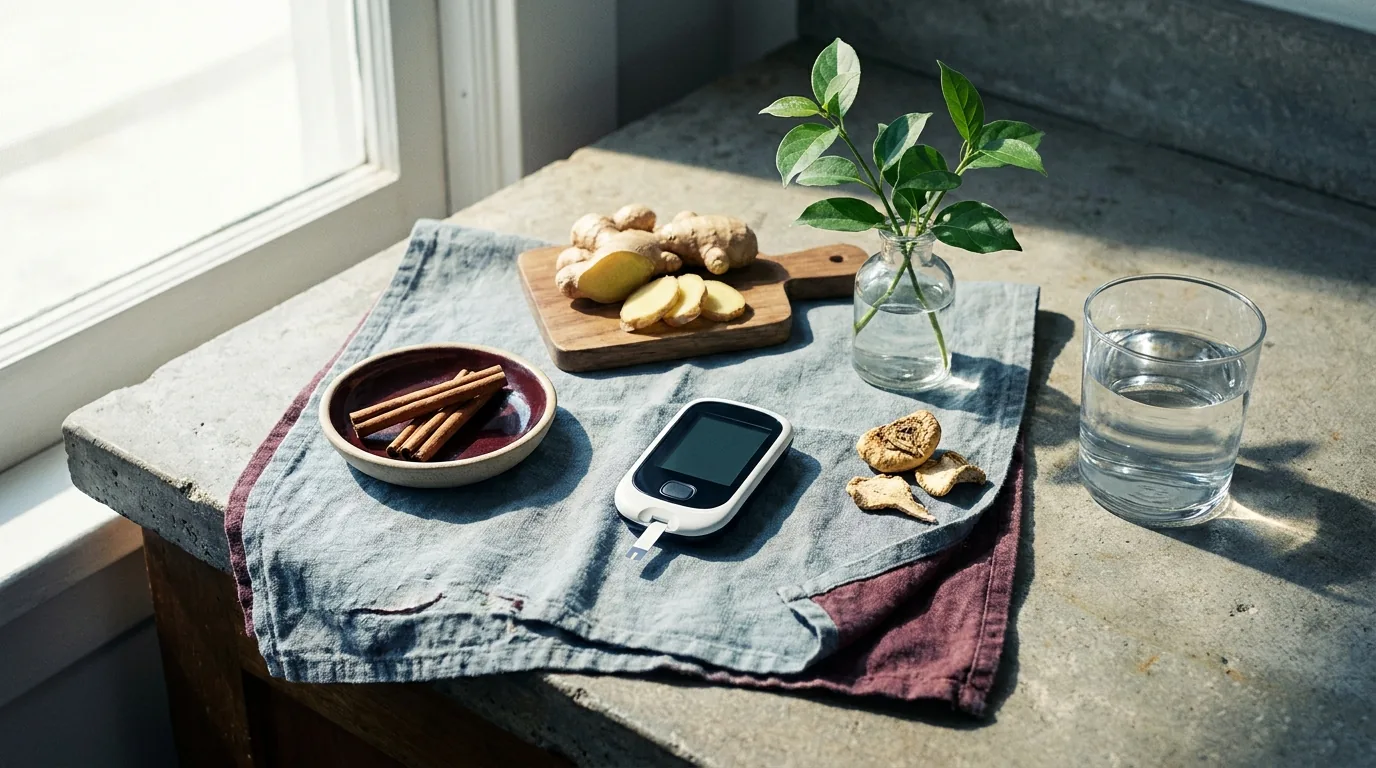
Apple cider vinegar (ACV) and berberine target similar outcomes through completely different mechanisms. ACV's acetic acid slows gastric emptying and modestly blunts post-meal glucose spikes — an acute, meal-by-meal effect (Johnston 2004 reported roughly a 20% reduction in post-meal glucose area-under-curve). Berberine activates AMPK and modulates the gut microbiome — a chronic, build-over-weeks effect that has produced fasting glucose and A1C reductions approaching metformin's magnitude in some trials (Yin 2008, Dong 2012). Berberine has the larger magnitude in head-to-head metabolic data. ACV is cheaper, food-based, and lower-risk. Both are adjuncts at best, not replacements for prescribed care.
Two mechanisms, two completely different stories
How apple cider vinegar works
The active in ACV is acetic acid — typically 5-6% by volume in commercial bottles. When acetic acid hits the stomach, two things happen. First, it modestly slows gastric emptying, which means carbohydrates from the meal enter the bloodstream more gradually and produce a smaller, slower post-meal glucose spike. Second, acetic acid has direct effects on muscle glucose uptake and hepatic glucose handling at the cellular level. The Johnston 2004 trial in Diabetes Care showed roughly a 20% reduction in post-meal glucose AUC when ACV was taken with a high-carb meal in insulin-resistant subjects. The effect is meal-by-meal and acute — it does not build up.
How berberine works
Berberine is an isoquinoline alkaloid with multiple documented mechanisms. The most-cited is activation of AMPK (5'-AMP-activated protein kinase), the master metabolic switch that, when activated, tells cells to burn fuel instead of storing it. AMPK activation downstream reduces hepatic glucose output, improves insulin sensitivity, and modestly reduces lipid synthesis. Berberine also modulates the gut microbiome over weeks, inhibits intestinal alpha-glucosidase, and may have anti-inflammatory effects. The effects build over weeks. We cover the full mechanism breakdown in our berberine review.
Why mechanism difference matters for how you would actually use them
ACV is a meal-tool. The studies used it acutely, taken with or before a high-carb meal. It does not need to "build up." It does not need 8-12 weeks to work. Berberine is a chronic intervention — taken three times daily, accumulating an AMPK-mediated effect over weeks, with the magnitude growing through about week 12 in most trials. The use cases are different even when the marketing positions them as interchangeable.
Magnitude of effect — honestly
| Outcome | Apple Cider Vinegar | Berberine |
|---|---|---|
| Post-meal glucose | ~20% AUC reduction (Johnston 2004) | Modest reduction over weeks |
| Fasting glucose | Small effect at best | ~1-2 mmol/L reduction (Dong 2012) |
| A1C (over 12+ weeks) | Limited evidence | ~0.7-1.5 percentage points (varies) |
| Weight (12 wk) | ~2-4 lb (Kondo 2009) | ~5 lb (variable) |
| Time to effect | Acute (per meal) | Chronic (4-12 weeks) |
| Evidence depth | ~6-10 small RCTs | 14+ RCTs, meta-analyses |
Berberine has the deeper evidence base and larger magnitude on chronic glycemic markers. ACV has the better evidence for acute meal-time glucose blunting and the simpler, lower-risk safety profile. Neither is in the same magnitude category as a GLP-1 receptor agonist or metformin. The TikTok framing collapses these distinctions. The honest framing maintains them.
Side-effect profiles compared
- ACV — tooth enamel. The most-documented issue. Undiluted ACV is acidic enough to erode enamel over time. Mitigation: dilute in water, drink through a straw, rinse the mouth after.
- ACV — throat irritation. Straight shots burn. Diluted in 6-8 oz water is the protocol most studies used.
- ACV — potassium and high-intake risks. Very high sustained intake has been associated with rare hypokalemia in case reports. At 1-2 tablespoons before meals, this is not a typical concern.
- Berberine — GI symptoms. Diarrhea, constipation, cramping, nausea. Most studies report these in 10-30% of users during the first few weeks. Improves with continued use.
- Berberine — CYP3A4 drug interactions. The most underappreciated berberine safety issue. Berberine inhibits CYP3A4, which metabolizes a huge fraction of prescription drugs. The clinical implication: combining berberine with prescription medications can change drug plasma levels unpredictably. If you take any prescription, talk to your prescriber before adding berberine.
- Both — hypoglycemia in combination. Either combined with insulin or sulfonylureas can amplify hypoglycemia risk. Not an issue at moderate intake without those medications.
Cost, dosing, accessibility
ACV. A 32-oz bottle of organic ACV with the mother costs $5-12 at most grocery stores. At 1-2 tablespoons per dose, one bottle lasts roughly 30-60 days. ACV is food. There is no supplement regulation issue, no quality variance worth worrying about, and no proprietary-blend math to unpack. The barrier is taste and the dilute-with-water habit.
Berberine. Quality varies more than people realize. The studied compound is berberine HCl at 500 mg per dose, three times daily. Brand variation in actual potency, purity, and excipient quality matters. Decent third-party-tested berberine runs $25-40/month at the 1,500 mg/day dose used in research. Cheap berberine on Amazon often under-doses or lacks verification. We cover the brand-level picks in our best berberine supplements roundup.
On pure cost: ACV wins by an order of magnitude. On pure magnitude of effect on chronic glycemic markers: berberine wins. The accessibility tradeoff is real.
Who each one fits
ACV fits the reader who: wants a low-stakes, food-based experiment with their meals, has stable blood sugar but suspects post-meal spikes are driving cravings or energy crashes, is not on any prescription medication, doesn't mind the taste-and-rinse routine, and wants to start cheap before committing to a supplement protocol.
Berberine fits the reader who: is exploring chronic glycemic-marker improvement, has prediabetes-range fasting glucose or A1C and has discussed it with their physician, is willing to commit to 12+ weeks of three-times-daily dosing, and is not currently on prescription medications that interact with CYP3A4 (or has cleared the combination with their prescriber).
Neither fits the reader who: is currently on prescribed diabetes medication without a doctor's review, is pregnant or breastfeeding (especially berberine — pregnancy data is limited), or is looking for a replacement for prescription care. The supplement industry's "nature's metformin" framing collapses real safety distinctions.
Compared offer — Sugar Defender, the blood-sugar adjacency
FAQ
Which one lowers blood sugar more?
Berberine, in head-to-head magnitude across the published trials. Apple cider vinegar (ACV) at 1-2 tablespoons before a high-carb meal modestly blunts the post-meal glucose spike — Johnston 2004 reported roughly a 20% reduction in post-meal glucose AUC when ACV was taken with a bagel-and-juice meal. Berberine at 500 mg three times daily has produced fasting glucose and A1C improvements in studies that approach metformin's magnitude (Yin 2008, Dong 2012 meta-analysis). The two play different time-scales: ACV is acute, berberine is chronic.
Can I take them together?
There is no published research on the combination, and there are reasons to be careful. Both can amplify glucose-lowering effects, which matters if you are on any prescribed diabetes medication. Berberine inhibits CYP3A4 and interacts with a wide range of prescription drugs. ACV is acidic and can affect potassium levels and tooth enamel at sustained high intake. If you are exploring either or both alongside an existing medication regimen, that conversation belongs with your prescriber — not the supplement aisle.
Is one safer than the other?
Both are generally well-tolerated at moderate doses. ACV's documented issues are mostly local — tooth enamel erosion (mitigated by diluting and rinsing), throat irritation from undiluted shots, and rare hypokalemia at very high sustained intakes. Berberine's documented issues are GI (diarrhea, constipation, cramping) plus the CYP3A4 drug-interaction profile, which is the more important safety consideration if you take any prescription medication. ACV is a food. Berberine is a supplement with pharmacological activity.
Which has stronger evidence for weight loss specifically?
Both have modest evidence at best. ACV studies (Kondo 2009, Tomoo 2018) reported small weight reductions — a few pounds over 12 weeks — accompanied by modest waist-circumference improvements. Berberine studies have shown similar magnitudes, sometimes slightly larger. Neither produces dramatic weight loss like a GLP-1 agonist. The TikTok claim that either is 'nature's Ozempic' overstates the magnitude by an order of magnitude. We deconstruct both in our supplement reviews.
Liquid ACV or ACV gummies — does it matter?
For blood-sugar effects, yes. The acute glucose-lowering effect of ACV is driven by acetic acid content. Most ACV gummies contain far less acetic acid per serving than 1-2 tablespoons of liquid ACV — sometimes 90% less. If the goal is the post-meal glucose effect, the liquid (diluted in water, taken before high-carb meals) is what the studies actually used. If the goal is convenience and the avoidance of GI burning, gummies are easier but may underdeliver. We cover the dose math in our ACV gummies review.
What about Sugar Defender or other blood-sugar supplements?
Sugar Defender is a ClickBank liquid that includes gymnema sylvestre, chromium, and other actives at undisclosed doses. It is positioned at the same audience as the berberine/ACV combination — adults 40+ who want a blood-sugar adjunct. The mechanism story is different (gymnema and chromium, not acetic acid or AMPK activation at the same potency). The same caveats apply: not FDA-approved, not a replacement for medication, and the proprietary-blend dosing makes head-to-head magnitude comparisons impossible.
Read more on Real Easy Diet
- Berberine review — the full ingredient breakdown
- ACV gummies review — liquid vs gummy dose math
- Berberine vs metformin — the prescription comparison
- Chromium vs berberine — two adjuvants compared
- Best berberine supplements (2026 editorial picks)
- Best ACV gummies (2026 editorial picks)
- Sugar Defender — full review
Sources
- Johnston CS et al. — Vinegar improves insulin sensitivity to a high-carbohydrate meal, Diabetes Care 2004
- Kondo T et al. — Vinegar intake reduces body weight, body fat mass, and serum triglyceride levels, Biosci Biotechnol Biochem 2009
- Yin J et al. — Efficacy of berberine in patients with type 2 diabetes mellitus, Metabolism 2008
- Dong H et al. — Berberine in the treatment of type 2 diabetes mellitus, Evid Based Complement Alternat Med 2012
- NIH NCCIH — Berberine and weight loss: what you need to know
- Examine.com — Independent supplement research database
A printable plan that refuses to count almonds.
Four-week schedule. Grocery list. Swap rules. No "fat-burning loophole." No app to download. You print it, you stick it on the fridge, you eat real food.
- 4-week schedule
- Grocery PDF
- Swap rules
- No app, no fees